Common Knee Injuries In Kids, Teens & Young Athletes
As children age and become more active, their risk for injury grows. Whether running, jumping, dancing, kicking, pivoting or any number of activities, knees are especially susceptible to injury or strain over time. So when are “growing pains” to be expected, and when does pain require a closer look?
As a sports medicine and orthopedic knee specialist in Des Moines, Dr. Barron Bremner has spent nearly 20 years at DMOS treating pediatric knee pain and sports knee injuries in kids of all ages. For this article, we asked Dr. Bremner to share his expertise to help parents be on the lookout for the most common knee injuries in kids. We’re breaking down the causes, symptoms and treatment options to help kids safely recover from knee pain.
What Causes Pediatric Knee Pain In Children & Teens?
Pediatric knee pain can stem from a variety of causes depending on the child’s age and activity level. Traumatic injuries like ligament tears and patellar dislocation are one possibility, but knee pain without inciting injury is also common, including infections, growth-related conditions and overuse injuries.
For younger children, knee pain may come from a fall-induced fracture or may be a sign of an underlying infection or medical condition. Older children and teens on the other hand are much more likely to experience sports knee injuries, whether from a specific triggering incident or overuse. Dr. Bremner stresses that knee pain in kids isn’t always urgent, but knowing how specific injuries or conditions present can help you feel more confident as a parent considering treatment for your child.
Common Knee Injuries & Pain In Young Kids
Knee injuries in toddlers and young kids may be particularly difficult to recognize when the child doesn’t have the words or knowledge to explain what’s wrong. Instead, parents should note changes in behavior or signs of pain like limping, avoiding activities or favoring one leg over the other. Pediatric knee pain in young children typically falls in one of three categories: pain from injury, pain without injury and pain from a chronic condition like juvenile rheumatoid arthritis.
Knee Pain From An Injury
Roughhousing and boundless energy aren’t uncommon in young children, and accidents happen. Most knee injuries for this age group are easy to treat at home with ibuprofen and ice as needed. However, Dr. Bremner notes a common knee injury in young kids known as a “toddler fracture” does require a cast to help the fracture heal. Toddler fractures are common in children ages four and below, typically caused by a fall from a short height like off of a bed or swingset. The fall results in a spiral fracture of the tibia, or the lower leg bone connecting the knee to the ankle. Persistent limping, an inability to bear weight or an obvious deformity are all signs your child should see a doctor to find the source of the pain.
Infection-Related Knee Pain & Knee Pain Without Injury
Sometimes, knee pain in a growing kid is self-explanatory: they’re growing. Growth pains are usually mild and go away as the child ages. Other times, knee pain without an inciting injury is the result of a bacterial infection, which can come on suddenly without an obvious cause. Pain from an infection may feel like an injury and share similar symptoms, like swelling, limping and avoidance of activity, but your child may also run a fever. A fever accompanied by pain should always be evaluated by a doctor to treat the infection.
Juvenile Rheumatoid Arthritis
If pediatric knee pain is persistent over a month or more, Dr. Bremner recommends scheduling an appointment with your child’s primary care physician or an orthopedic specialist. Juvenile rheumatoid arthritis (JRA) mimics an infection or injury, causing swelling and pain, but is a chronic condition typically impacting children between the ages of three and 16. Bloodwork helps to diagnose this condition or rule it out.
If JRA is found, the condition is also known to impact sight, so your child should have their eyes evaluated by a professional, as well. Doctors can help children manage inflammation and reduce symptoms, and many children eventually outgrow the condition.
Sports Knee Injuries & Knee Pain In Teens
After puberty, older children and teens are more prone to sports knee injuries caused or exasperated by running, jumping, pivoting or participation in contact sports. Some of the most common knee injuries in kids involved in sports are acute, happening suddenly, while others develop from overuse over time.
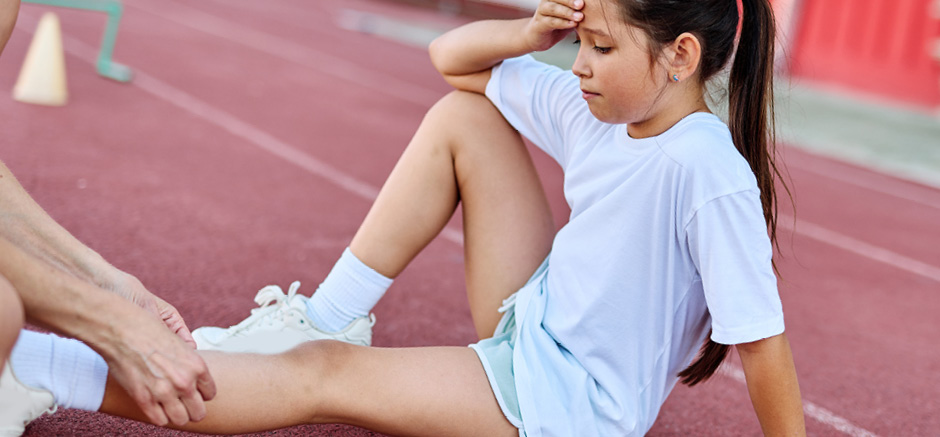
ACL Tears, Meniscus Tears & Patellar Dislocations
Traumatic sports injuries in the knee often involve torn ligaments or cartilage like the anterior cruciate ligament (ACL), medial collateral ligament (MCL) and meniscus or a dislocated kneecap (patellar dislocation). A torn ACL is considered an acute injury which the athlete often describes as a popping sensation before the knee gives out. Meniscus tears often go hand-in-hand with an ACL injury, as the cartilage stabilizing the knee is torn. MCL tears may also co-occur with an ACL tear, a particularly common injury for football players.
While young athletes may notice initial pain and swelling immediately following these injuries, symptoms often improve after a few days, and they may even feel comfortable returning to activity. However, Dr. Bremner emphasizes that just because pain goes away, doesn’t mean the injury has healed. ACL and meniscus tears typically require surgery and rehabilitation, while MCL tears benefit from bracing to protect the ligament. Without treatment, young athletes are more susceptible to further injury or chronic conditions like arthritis.
Patellar dislocation or subluxation, also known as dislocation of the kneecap, occurs when the kneecap shifts out of place and pops back in, causing the knee to swell. These injuries are easy for doctors to physically observe and feel, but MRIs and X-rays can provide an official diagnosis. Bracing and rehabilitation are common treatment options for dislocations causing pediatric knee pain, though reconstruction surgery may be required if the kneecap remains unstable.
Repetitive Stress & Knee Overuse Injuries
Active individuals at any age are susceptible to injury or pain, but growing athletes especially are at risk of developing a knee overuse injury. Dr. Bremner identifies three common knee injuries in kids resulting from overuse:
- Patellofemoral pain syndrome - Also referred to as anterior knee pain, patellofemoral pain syndrome presents as a dull ache directly surrounding or behind the knee cap. Pain is gradual over a month or more, often without any physical signs like swelling. A diagnostic X-ray may even come back normal, so persistent pain without a discernable cause is the most telling sign this condition is behind your kid’s knee pain. Periods of sustained activity like running or jumping trigger pain, caused by a muscle imbalance or rapid growth.
- Osgood-Schlatter disease - This condition causes pain below the kneecap, along with a visible bump atop the shin. Young athletes ages 11 to 13 develop this condition as a result of the patellar tendon pulling on a still developing growth-plate, causing pain over time that worsens during sports like basketball, volleyball, soccer, football, dance and gymnastics.
- Patellar tendonitis - Known as “jumper’s knee,” this aptly named injury occurs with frequent jumping. Overuse leads to pain where the patellar tendon meets the shinbone, causing an ache and stiffness in the knee.
No parent wants their kid to be in pain. Thankfully, most overuse injuries and conditions improve through rest, physical therapy, bracing or anti-inflammatory medication as needed. Kids usually outgrow these conditions with pain management and rehabilitation providing support in the meantime.
When Should My Child See A Doctor For Knee Pain?
Knee pain and injuries in kids should be evaluated by a doctor if pain follows a sudden injury or is accompanied by a fever, swelling, “popping” sensation or inability to bear weight. Persistent or recurring pain lasting more than a month should also be examined. For acute (sudden) injuries or severe pain, take your child to a DMOS Urgent Injury Clinic near you. If symptoms aren’t urgent, schedule an appointment with a knee specialist at DMOS for initial evaluation.
If you’re unsure whether an injury or pain warrants an urgent evaluation, Dr. Bremner recommends using Virtual DMOS to share photos and symptoms with a DMOS provider online. This service is free and connects you with one of our local orthopedic specialists who will take your child’s symptoms into consideration and recommend urgent injury care or follow-up with a physician as needed.
How We Treat Kid & Teen Knee Injuries At DMOS
Our orthopedic knee specialists in Des Moines treat pediatric knee pain through a variety of techniques, starting with diagnostics. We may perform physical examinations of the injury, order X-rays or bloodwork or recommend an MRI. Imaging and examination allow us to identify tears, fractures or inflammation so we can recommend the appropriate treatment for your child. Bloodwork helps us rule out infection or find underlying conditions like juvenile rheumatoid arthritis.
For growth-related knee pain or overuse injuries, sometimes the best treatment is rest and recovery to help your young athlete get back safely on their feet. If pain continues or can’t be managed through icing or anti-inflammatory medication at home, we may recommend physical therapy, rehabilitation at our Engineered Performance facility tailored for athletic recovery or bracing and other medical equipment to support the joint.
For acute sports knee injuries like ACL and meniscus tears or patellar dislocation, surgery is the best option to help restore your child’s mobility and prevent further pain or complications.
If A Knee Injury Requires Surgery, How Long Is The Recovery Process?
Recovery after knee surgery for common knee injuries typically takes six months before your child can return to sport. Your child will spend the first few weeks following the procedure on crutches and supervised activity like jogging is reintroduced at around three months. Dr. Bremner and his fellow surgeons at DMOS follow-up with monthly appointments to track progress post-op, and your child will likely be referred to a physical therapist for ongoing rehabilitation. As movement is restored, doctors may recommend your child return to activity with modifications. Your child’s safe recovery and ability to get back to doing what they love is our top priority at DMOS.
Schedule An Appointment With Our Orthopedic Knee Specialists
Knee injuries in kids are no match for our dedicated sports medicine and orthopedic specialists at DMOS. Scheduling an appointment with DMOS is easy and flexible. While some patients are referred by their family care provider, a referral is usually not needed. You can call us directly to schedule with one of our providers, book an appointment online or start with Virtual DMOS to discuss your child’s injury and get pointed in the right direction for further care. If you need immediate assistance, we offer Urgent Injury Clinics at most locations for same-day treatment, no appointment necessary!
Book An Appointment Find A Provider